Choose timezone
Your profile timezone:
DEMO SITE - 🔥 Please note this calendar is still in a pilot phase, and not yet managed by all schools.

PHILO DAY is an event where philosophy practitioners and pupils come together to share ideas, ways of reading philosophical texts and approaches to philosophical problems.
This year’s theme is THINKING AND DWELLING.
PhiloDay will take place on February 9th and 10th, 2023.

PhiloDay is organised by European School Brussels IV
Philoday is promoted by RadioEuropa Laeken and supported by the UNESCO Chair: "Philosophy practices with children, an educational basis for intercultural dialogue and social transformation" and the APEEE Bru IV.

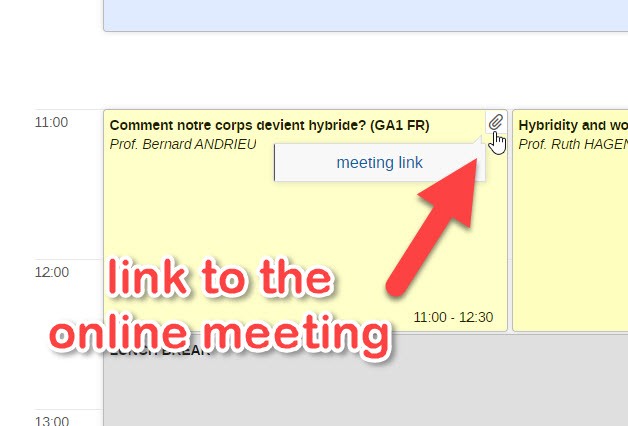
👉 Find the links to the online meetings for each session on the timetable.
👉 Register to the meetings for each session on the registration page.
The opening ceremony takes place simultaneously in English and French.
The Head of Team PhiloDay 2023, Ms Andreea Carina BOTOROAGA, opens the ceremony
The Head of European School Brussels IV (Laeken), Mr Markko MATTUS
The Deputy Director of European School Brussels IV (Laeken), Mrs Sandra MASET CALPE
Prof. Philippe VAN PARIJS, Professeur des Universités, UCL, KUL, Chaire Hoover
Prof. François JOURDE, Pedagogical Development Unit, OSGES
The Head of Team, Ms Andreea Carina BOTOROAGA
LINKS TO THE EDI ROOMS ARE HEREAFTER - SEE BELOW
This is a fun, challenging, and competitive activity.
An ethical dilemma is given to each contestant. The ethical dilemma is read out loud and/or projected onto a screen.
Each contestant is given two minutes to prepare a response, that is, to propose a well-argued solution to the problem.
The response has to be delivered under two minutes.
Each response is assessed by a panel of judges.
It is either a talk or a more interactive presentation/workshop on the theme of HYBRIDITY, which requires the active participation of pupils and teachers alike.
It is usually given by a guest speaker or by a Philosophy teacher from any of the European Schools. The main goals here are to raise philosophical questions, launch (collective) philosophical ways of thinking, and engage the pupils.
This lecture brings together and juxtaposes the reflections of Martin Heidegger (focusing mainly on his writings on dwelling) and Emmanuel Levinas (specifically the part on dwelling developed in Totality and Infinity).
Short bio
Prof. Angelos Mouzakitis is Assistant Professor in Social Theory at the University of Crete in Greece and he also teaches as Associate Lecturer for the Hellenic Open University. He conducted his doctoral research at the University of Warwick, U.K., under the supervision of Professor Peter Wagner and spent 2003-2004 as Jean-Monnet Fellow at the European University Institute in Florence, Italy.
Le vieux slogan “Think globally, act locally” est incomplet.
Si nous voulons rendre la terre durablement habitable tour toutes et tous, il faut agir globalement, pas seulement localement. Et cet agir global est difficile. Pour sauver la planète d’une catastrophe climatique, il faut que chaque pays assume sa part équitable de l’immense effort requis. Mais qu’est-ce qu’une part équitable ? Et dans un contexte de concurrence économique mondiale et même de conflit militaire international, comment créer la confiance mutuelle indispensable ?
Par ailleurs, s’il faut penser globalement, il faut aussi penser localement, tenir compte des connaissances, perceptions, sensibilités et même émotions des résidents, usagers, travailleurs, consommateurs, parents, enfants directement affectés par les mesures qu’il importe de prendre dans les domaines les plus divers. Mais comment nos démocraties peuvent-elles y faire place sans céder à la dictature des NIMBY et des droits acquis au détriment de l’intérêt général ? Pas facile non plus. Mais il le faut.
Think globally and locally, act locally and globally !
Conférencier: Le Prof. Van Parijs a étudié la philosophie, le droit, l'économie politique, la sociologie et la linguistique (Bruxelles, Louvain, Oxford, Bielefeld, California)
Biographie sommaire:
Après avoir été chercheur au Fonds national de la recherche scientifique de 1974 à 1991, il a été nommé professeur à la Faculté des sciences économiques, sociales et politiques de l'Université de Louvain et chargé de créer la Chaire Hoover d'éthique économique et sociale, dont il a été le responsable de 1991 à 2016, lorsqu’il a accédé à l’éméritat. Parallèlement, il a été « regular visiting professor » à l’Université Harvard de 2004 à 2008 et à l’Université d’Oxford de 2011 à 2015. Depuis 2006, il est également "bijzonder gasthoogleraar" à la KU Leuven, où il est cotitulaire d'un 'research seminar in political philosophy". A l'UCLouvain, il enseigne deux cours en tant que professeur invité : "Political Thought" (avec Yannick Vanderborght) et "Political Philosophy and te European Union" (avec Luuk van middelaar) Depuis 2016, il est aussi Robert Schuman Fellow à l'institut universitaire européen (Florence), où il co-organise une série de "consevations for the for the future of Europe".
Il est l'auteur d’un nombre considérable d’essais et d’articles, parmi lesquels: Evolutionary Explanation in the Social Sciences (London & Totowa NJ 1981), Le Modèle économique et ses rivaux (Genève 1990), Qu'est-ce qu'une société juste? (Paris 1991), Arguing for Basic Income (London 1992, ed.), Marxism Recycled (Cambridge 1993), Real Freedom for All (Oxford 1995), Sauver la solidarité (Paris 1995), Refonder la solidarité (Paris 1996), Solidariteit voor de XXIste eeuw (Leuven 1997), Ethique économique et sociale (Paris 2000, avec C. Arnsperger), What's Wrong with a Free Lunch ? (Boston 2001), Hacia una concepcion de la justicia global (Medellín 2002), Cultural Diversity versus Economic Solidarity (editor, Brussels 2004), L'Allocation universelle (Paris 2005, avec Y. Vanderborght), Just Democracy. The Rawls-Machiavelli Programme (Colchester, 2011), Linguistic Justice for Europe and for the World (Oxford, 2011), After the Storm. How to save democracy in Europe (editor, Tielt, 2015 avec L. van Middelaar), Basic Income. A radical proposal for a free society and a sane economy (Harvard, 2017, avec Y. Vanderborght) et Bemgiuù. Une utopie de notre temps (Bruxelles, 2018)
En 2020, il a cité par Prospect comme le huitième plus grand penseur de l'ère COVID 19.
Voir aussi: https://uclouvain.be/fr/chercher/hoover/philippe-van-parijs.html
These constitute the core of the event. These smaller gatherings of pupils and teachers in different rooms happens simultaneously.
Pupils taking part in the workshops have to write a paper presenting their commentary on a philosophical text of their own choosing, preferably making a link to the theme of HYBRIDITY. The theme or topic of the paper may be chosen from one of the following:
Ethics
Theory of Knowledge
Politics and Society
Philosophical Anthropology
Other domains
The participant’s paper may consist of the following:
A substantial excerpt from a philosophical text;
A commentary on this text which should explain the main claim and question it tries to answer;
A counterpoint or counter-argument to the text’s main claim (this can either be the writer’s own reflections or another viewpoint from another thinker/field of study).
A paper can be delivered in either French or English. Each workshop lasts for 1 hour. There should be at least 15 min. for a plenary “question and answer” portion of the session. Each session is managed by a pupil chairperson (with the support of a teacher).
Title: Perfectionism, creative output and self-worth
Description: For my workshop, I would like to talk about the idea of perfectionism and its link to creative output and self-worth.
I will approach the topic from both a philosophical viewpoint as well as use case studies of media (movies such as "Black Swan", "Whiplash", "The Red Shoes" etc.) to illustrate how these sentiments relate to art and the ones who make it through the tropes presented.
Title: On education and breeding
Description: In our presentation, we would like to analyze how education and breeding influence the human being throughout their lives, using both philosophical and psychological theories.
Title: How does media consumption and ideology challenges free will?
Description: We will explore how external forces, such as media consumption and ideology, affect our free will and rational thinking. We will explore this using theories of epistemology, political philosophy, and free will and determinism.
Comment agir face à l’urgence climatique? Comment engager l’architecture dans de nouveaux modèles économiques? Comment assurer la justice sociale pour tous? Comment rendre notre façon d’habiter moins hétéronormative?
Voilà quelques uns des défis que l’architecture doit affronter. L’architecture traite d’objets interconnectés: la ville, l’espace public, les routes, le paysage ou les infrastructures. Il faut appréhender cette discipline de manière transdisciplinaire et trans-scolaire.
Dans cet atelier nous allons voir dans quelle mesure l’architecture a un role social et éthique fondamental.
Title: Que sont la vertu et le mérite ?
Devrait-on se diriger vers elles ? Et si oui, comment ?
Description: Dans cet atelier, nous allons explorer ensemble, à travers la réflexion, l’étendue de l’intégration de la dimension morale de l’individu dans les sociétés actuelles.
Title: Philosophy and Pop Culture: Epistemology in the movie The Truman Show.
Description: My topic for the presentation the theme of epistemology in the movie The Truman Show, and how it relates with the "thinking and dwelling" in today's society.
The workshop will discuss the philosophical theories that are incorporated in the movie such as hyperrealism, Descartes' Method of doubt, etc. How does the movie portray some of the key theories in epistemology.
Title: Thinking and dwelling with Dostoevsky and Sartre
Description: Presentation analysis of Jean Paul Sartre and Dostoevsky's existentialism alongside comparisons and contrasts, with focus on their mindsets and outlook on life through the power of thinking and dwelling.
Title: Demeures hantées
Description: 'Demeures hantées', est un atelier explorant le lien entre le lieu et l'habitant. L'analyse se fait au travers les œuvres 'Coraline' et 'The Haunting of Hill House', et leur rapport avec le surnaturel et l'imaginaire. Comment le lieu qu'on habite nous influence t'il? Comment laisse t'on une trace dans une demeure, même parfois après la mort? Et pourquoi l'horreur de maisons nous intrigue t'elle?
Title: The Absurdity of our Existence
Description: Why do we exist? What is the point of life? How should we live it? How free are we? And what does this freedom mean for us? These are questions that we struggle to find an answer to that is both truthful and satisfactory. The trouble is, often the naked truth is not as appealing as we subconsciously want it to be. I will present theories of existentialism, free will, nihilism and the Absurd to allow the audience to gain a new perspective on human existence. I will analyse Sartre’s novel Nausea and parts from Franz Kafka’s novel Metamorphosis on these theories, and further incorporate Friedrich Nietzsche’s thoughts on existentialism and Albert Camus’ on the Absurd to develop my analysis.
These constitute the core of the event. These smaller gatherings of pupils and teachers in different rooms happens simultaneously.
Pupils taking part in the workshops have to write a paper presenting their commentary on a philosophical text of their own choosing, preferably making a link to the theme of HYBRIDITY. The theme or topic of the paper may be chosen from one of the following:
Ethics
Theory of Knowledge
Politics and Society
Philosophical Anthropology
Other domains
The participant’s paper may consist of the following:
A substantial excerpt from a philosophical text;
A commentary on this text which should explain the main claim and question it tries to answer;
A counterpoint or counter-argument to the text’s main claim (this can either be the writer’s own reflections or another viewpoint from another thinker/field of study).
A paper can be delivered in either French or English. Each workshop lasts for 1 hour. There should be at least 15 min. for a plenary “question and answer” portion of the session. Each session is managed by a pupil chairperson (with the support of a teacher).
Title: La Proximité et la question de l’habiter
Description: Mettre en question ce qu’habiter veut dire : s’il y va d’un certain lieu ou domaine de séjour, que l’on appelle « monde », cela implique pour l’humain un être-au-monde, une manière d’être (ethos). Comment penser celle-ci telle qu’elle a été, est, et a à être ? Ne doit-on y voir qu’un désir de s’abriter ? Ou bien alors se mettre à l’écoute de la dimension métaphysique du demeurer qui s’y joue ? C’est à une méditation que vous convie cet atelier, c’est-à-dire le tracé d’un chemin, vers ce qui est « le plus digne de question » (fragwürdig) comme l’appelle Heidegger. Ce qui est en jeu ici est une proximité à soi, aux autres, à la Nature, qui n’est peut-être qu’une seule et même Proximité. C’est où habiter et penser peuvent et doivent à nouveau se conjuguer : habiter en pensant, penser en habitant : « Nous attarder, fût-ce auprès du plus familier ne nous est pas donné » (Rilke, À Hölderlin).
Speaker: Walter Antoine est Docteur en philosophie de l'Université de Nice - Sofia Antipolis. Il a étudié la philosophie éthique à l'Université de Bruxelles. Il a soutenu sa thèse doctorale sur le thème de la proximité philosophique ("Le concept de proximité philosophique - ou la raison en quête d'elle-même", sous la direction de F. Dastur). Ses intérêts de recherche portent essentiellement sur la métaphysique.
Parallèlement à son activité de recherche et d'enseignement, Walter Antoine mène articule une œuvre photographique où il cherche à interroger le monde et la présence au monde de l'homme. Une sélection de ses ouvres sera exposée lors de PhiloDay - voir page d'accueil du programme.
Title: Penser sans habiter : des philosophes sans logis en Grèce ancienne
Description: Dans la pensée grecque, l’οἶκος, « la maison », est le fondement de la vie politique et économique de la cité. Un homme sans foyer perd ses droits civiques et, plus grave, sa τιμή, c’est-à-dire son « honneur », sa « respectabilité ». Un Spartiate sans foyer ne peut pas combattre pour défendre sa patrie. Plus largement, la parole d’un sans-logis en Grèce ancienne ne se voit accorder aucune valeur car on considère que l’exigence de satisfaire certains besoins vitaux peut le pousser à mentir (Homère, Odyssée, XIV, 124-127). Plus largement, la maison sert de modèle pour concevoir la gestion d’une cité : Platon, dans Le Politique (259b), ne conçoit l’activité de gouverner que comme la gestion à grande échelle d’un bon père de famille sur son domaine. C’est dire si la maison est le fondement de la cité grecque. Pourtant, comme le note Hannah Arendt dans La Condition de l’Homme moderne, la vie du foyer, asservie par la nécessité de la vie biologique et les tâches domestiques (préparer à manger, éduquer ses enfants, se laver, faire le ménage), semble peu enviable, au contraire de la vie de la cité, domaine où l’on peut exercer sa pleine et entière liberté. C’est pourquoi certains philosophes ont voulu s’affranchir du carcan de la vie domestique, quitter le foyer, mettre la clef sous la porte, pour définir un autre rapport au monde, à la cité et aux autres. C’est le cas des sophistes, qui voient dans leur errance de conférenciers itinérants un moyen d’accéder à une forme de savoir et d’élargir les horizons. Ce modèle de vie est poussé à l’extrême par les cyniques, qui refusent toute forme de domiciliation, et voient dans leur vie de mendiant un moyen de devenir κοσμοπολίτης, « citoyens du monde », et de proposer ainsi un nouveau pacte politique et une nouvelle manière de voir le monde.
Le but de cet atelier sera d’explorer certaines considérations des Grecs de l’Antiquité pour éclairer des problématiques actuelles : pourquoi ne donne-t-on pas le droit de vote aux sans-abris dans certains pays ? Gérer une maison de manière démocratique est-il une utopie ? Un bon politique est-il seulement un bon gestionnaire ? Le politique a-t-il son mot à dire sur ce qui se passe dans la sphère privée ?
Speaker: Ancienne élève de l’École Normale Supérieure de Paris, professeur agrégée de Lettres classiques et docteur en Littérature grecque ancienne de Sorbonne Université, j’enseigne à l’École européenne de Bruxelles IV depuis 2018. Mes recherches portent sur le rapport entre la littérature et son contexte politico-social durant l’Antiquité grecque. Ma thèse de doctorat portait sur le mendiant et la mendicité dans la littérature grecque archaïque et classique. Actuellement, je m’intéresse au lexique politique chez Homère et à la façon dont il a évolué au fur et à mesure de la naissance de la cité grecque à l’époque archaïque.
Title: Lonesome reflections - thinking on your own
Description: In this workshop we will do some practical exercises to get you thinking. The goal of these exercises is being able to criticize your own convictions, creating clarity in your thoughts and to find out what values underlie your actions. The teacher will demonstrate the exercises and the participants will be able to perform them on their own (offline en online).
Speaker: Prof. Sam de Vlieger studied philosophy (MA) at the KU Leuven. He then obtained a teaching qualification in economics and philosophy. He is now a philosophy teacher at the Pantarijn, a secondary school in Wageningen. He specializes in the art of asking questions and followed training courses with Kristof van Rossem.
He is developing the web application www.peertest.nl on which students can test each other by asking each other questions. He writes about philosophy, pedagogy and ICT.
Titre: Pensare e abitare l’esistenza: Hölderlin, Heidegger, Agamben.
Description: “Pensare” e “abitare” sono verbi che denotano due “attività” molto peculiari. Sono termini che indicano qualcosa che inerisce strutturalmente all’esistenza umana. Una tradizione poetico-filosofica lunga almeno due secoli, da Hölderlin a Heidegger fino a Giorgio Agamben, ha meditato profondamente sul nesso che avvince esistenza, parola poetica, concettualità filosofica, e quella peculiare “attività” attraverso la quale gli esseri umani abitano la terra, il tempo, lo spazio, l’esistenza stessa. Si tratta di pensare questo misterioso “modo” dell’esistenza umana, che solo la parola filosofico-poetica sa dischiudere.
Orateur: Pier Alberto PORCEDDU CILIONE is Assistant Professor in Aesthetics,
Department of Human Sciences, University of Verona. His main research focuses are Aesthetics and Philosophy of Art, Philosophy of Music, Morphology, Philosophy of Culture, Theory of Translation.
Titre: Lieu, vrai lieu, non-lieu: l’habitation poétique d’Yves Bonnefoy
Description: Dichterisch wohnet der Mensch, « l’homme habite en poète ». Ce vers de Hölderlin, ainsi que la réflexion de Heidegger qui l’a rendu célèbre, ont profondément influencé plusieurs écrivains et penseurs de l’après-guerre. Parmi eux, toute une famille de poètes français qui, à partir des années cinquante, se sont interrogés sur l’activité particulière désignée par le verbe « habiter » et sur ce qui peut en constituer à la fois l’objet et la possibilité : la terre, l’espace, le lieu. Yves Bonnefoy (1923–2016) est peut-être l’auteur le plus représentatif de ce groupe. En opposition à l’élan idéaliste du platonisme et aux dérives absolutistes-imaginatives du surréalisme, Bonnefoy exalte l’enracinement dans la terre et la fidélité à l’existence. Les titres de certains de ses écrits en témoignent : Pierre écrite, Le Cœur-espace, L’Arrièrepays, Le Grand Espace, Le Lieu d’herbes. Dans un prolongement inédit de la réflexion philosophique de Heidegger, la poésie et la prose de Bonnefoy tentent de redéfinir l’espace et le sens de l’« être-aumonde », nous invitant à ne pas déserter la « réalité rugueuse » du lieu au profit des illusions et des promesses de mondes oniriques et de paradis idéaux.
Orateur: Filippo Pietrogrande est Docteur en philosophie de l'Université de Groningen. Il a étudié la philosophie et l'histoire à l'Université de Padoue, à l'Université de Vérone, à l'Université d'Utrecht, et à la KU Leuven. En 2022, il a obtenu l'agrégation en philosophie à l'ULB et soutenu sa thèse doctorale sur le thème de la prière dans la philosophie française contemporaine. Ses intérêts de recherche incluent la philosophie contemporaine et la philosophie de la religion.
Title: Brussels region : Tomorrow, 1 million of farmers, bikers, local consumers and active citizens ?
Description: It will be a three-way dialogue between Prof. Man Hua, Emma Peltier and Iseult Saliez (S6 students) concerning the following issues:
"Eating better?"
"Moving differently?"
"Consuming differently?"
"Acting for others?"
L'atelier sera précédé d'une projection du documentaire Demain de Cyril Dion, la veille du début du PhiloDay, le mercredi de 13h30 à 15h30 à l'école en salle polyvalente ou en A003 (à déterminer). Il n'est pas nécessaire d'assister à la projection pour participer ensuite à l'atelier. Cependant, l'opportunité de voir le documentaire, si vous ne l'avez pas déjà vu, vous permettra de connaitre en détail les initiatives qui seront discutées pendant l'atelier.
Before the Philoday, the documentary Tomorrow by Cyril Dion will be shown at school on Wednesday 8 February from 1.30 to 3.30 pm in the Salle Polyvalente or in A003 (to be determined). It is not necessary to attend the screening to participate in the workshop afterwards. However, the opportunity to see the documentary, if you have not already seen it, will allow you to know in detail the initiatives that will be discussed during the workshop.
Speaker: Prof. Man HUA studied Chemistry and launched the project Green School a couple of years ago at Laeken. With a Committee of pupils he succesfully introduced sustainable development objectives and initiatives, driving EEB4 to a Green school Label (2022).
Title: Est-ce que la science peut répondre à toutes les questions ?
Description: Dans le cadre de cet atelier les participants seront invités à réfléchir sur les limites de la science et sur les domaines dans lesquels elle ne peut pas apporter de réponses. Les élèves seront également invités à réfléchir sur l'importance de la réflexion philosophique en tant qu'outil pour comprendre les limites de la science, en parcourant des questions telles que : Peut-on comprendre les émotions et les sentiments uniquement à travers les sciences ? Est-ce que la science peut apporter des réponses sur le sens de la vie ? Est-ce que la science peut résoudre tous les problèmes éthiques ? Est-ce que la science peut prouver la réalité objective de notre monde ? Peut-on comprendre les phénomènes surnaturels à travers les sciences ? Est-ce que la science peut répondre à toutes les questions sur l'univers ?
Speaker: Doan VU DUC est doctorant en Philosophie. Son domaine de recherche porte sur la délimitation de la science et les rapports entre science et non-science. Parallèlement à ses activités de recherche, en collaboration avec l'ULB, il anime des ateliers de sensibilisation à la culture scientifique et d'éveil à l'esprit critique - Doubt my sciences (https://www.ulb.be/fr/plateforme-collaborative-ulb-e-col-e/doubtmysciences).
Title: Thinking and dwelling in London Afro-Caribbean diaspora in Britain and Black Women’s political reflections on decolonization, immigration and citizenship
Description: The goal of the presentation is to tackle some of the most important political reflections of the Black Women’s Movement in Britain after WWII concerning immigration, work and citizenship.
The migration flows from the Caribbean, which were strongly influenced by the decolonization process, changed the social composition of the British society. London quickly became the center for radical activists coming from the British colonies and their experiences and discrimination based on race, class and gender laid the ground for the development of critical reflections on their own identity and on the immigration and citizenship policies that were trying to define who was British and who was not.
By analyzing the Black British Women’s critique of the nationality and immigration system, the aim of the presentation is to reflect on how the contemporary European immigration policies define who is part of that community and on the multicultural and diverse composition of our society.
Speaker: Luca Di Paola obtained his PhD in International Studies at the University of Naples “L’Orientale” with a thesis in contemporary history titled Black Women in Britain Speak Out: il Movimento delle donne di discendenza africana e asiatica tra migrazioni, anti-imperialismo, lavoro e cittadinanza nell’Inghilterra del secondo dopoguerra (1945-1985). During his PhD, research was done on the oral and written sources at the Black Cultural Archives in Brixton, where he focused on the political activism of afro Caribbean and Asian women in Britain, and the collections at the National Archives, at the Lambeth Archives, at the Institute of Race Relations and at the George Padmore Institute. He was a visiting scholar at the University of Reading and he participated in several international conferences, such as the Summer School “Black Europe”, held in Amsterdam, and the conference “Gender and Public Space” at the University of Rouen.
His research interests focus on migrations, racism, postcolonialism and black feminism. In 2020 he wrote an essay, titled “Claudia Jones : tra comunismo, femminismo e anti-imperialismo”, which was published in the book “Marx nei margini. Dal marxismo nero al femminismo postcoloniale”, edited by an italian editor, Alegre.
This is a fun, challenging, and competitive activity.
An ethical dilemma is given to each contestant. The ethical dilemma is read out loud and/or projected onto a screen.
Each contestant is given two minutes to prepare a response, that is, to propose a well-argued solution to the problem.
The response has to be delivered under two minutes.
Each response is assessed by a panel of judges.
These constitute the core of the event. These smaller gatherings of pupils and teachers in different rooms happens simultaneously.
Pupils taking part in the workshops have to write a paper presenting their commentary on a philosophical text of their own choosing, preferably making a link to the theme of HYBRIDITY. The theme or topic of the paper may be chosen from one of the following:
Ethics
Theory of Knowledge
Politics and Society
Philosophical Anthropology
Other domains
The participant’s paper may consist of the following:
A substantial excerpt from a philosophical text;
A commentary on this text which should explain the main claim and question it tries to answer;
A counterpoint or counter-argument to the text’s main claim (this can either be the writer’s own reflections or another viewpoint from another thinker/field of study).
A paper can be delivered in either French or English. Each workshop lasts for 1 hour. There should be at least 15 min. for a plenary “question and answer” portion of the session. Each session is managed by a pupil chairperson (with the support of a teacher).
Title: Densité de population et degré de développement culturel : existe-t-il une relation causale entre ces deux phénomènes ? Un regard critique sur la pensée de l'ethnologue français Michel Leiris (1901-1990).
Description: Y a-t-il un rapport entre la densité de population et le développement culturel ? Les grandes villes sont-elles toujours les moteurs de la vie intellectuelle d'un pays ? Aujourd'hui, les thèses prophétiques de Michel Leiris sur l'innovation semblent devenues un lieu commun dans des sociétés qui connaissent le multiculturalisme, la mixité sociale et la gentrification. Dans "Race et civilisation" (1951), en effet, Leiris montre de façon convaincante qu’une forte densité de population favorise le développement culturel. Et pourtant : pouvons-nous soutenir sans hésitation que les interactions sociales favorisent l'innovation culturelle à Bruxelles ? Les métropoles restent-elles les lieux privilégiés de la culture ? Cet atelier sera l'occasion de tester la validité des thèses de Leiris et vérifier leur capacité d'expliquer les spécificités du contexte socio-culturel bruxellois.
Speaker: Le Prof. Emiliano Fruciano enseigne la philosophie et la citoyenneté dans des écoles bruxelloises. Il est agrégé de philosophie (ULB), détenteur d'un MA en Philosophie, de l'Université de Catane (Italie) et d'un doctorat et d'un MA en Histoire et civilisations de l'EHESS de Paris (France). Son domaine de prédilection est la philosophie des sciences.
Title: Truth, Mystery, Ideology: from Plato to Marx and Back Again
Description: The idea is to make some suggestions about the relationship of three things: philosophy; religious questioning and belief; and both modern political ideology (taking Marxism as the central example) and the modern 'hermeneutic of suspicion' (Paul Ricoeur) with its pretense to unmask all truth claims as 'ideological'.
The idea for now is 1) to start with something that jolted me many years ago, Eric Voegelin's contrast of the 'faith' of the religious man with the 'faith' of the modern revolutionary or political 'true believer'; 2) to explore this distinction by considering the notion of 'mystery' as developed by Gabriel Marcel and Bernard Lonergan; 3) after this discussion, to revisit 'Socratic ignorance' and Plato's Cave allegory.
Speaker: Philosophy, History, and Ethics teacher, EEB4.
After attending a Jesuit high school in Philadelphia, I studied philosophy and German literature as an undergraduate at Columbia before completing a PhD at Princeton in modern European intellectual history, writing a dissertation on Nietzsche. After 14 years of university teaching in the US at the University of Pennsylvania, Harvard, and the 'Great Books' school St John's College (Annapolis, Maryland), I moved to Brussels in 2007, where for the past 15 years I have enjoyed being a secondary school teacher. I've been at EEB4 since 2015.
Title: When the world turns alien
Description: Global heating has pushed ecosystems towards the edge of a deep destablisation. Those who have seen the data quite rightly struggle to understand how human society could allow such situation to happen. After a brief recap of the science of climate tipping points, this workshop will consult different philosophers who found themselves inside worlds that were absurd, and profoundly and alien to them.
To be able to indulge the philosophical dimensions of this scenario students will be required to do some background work before the session (from the Climate Academy textbook). https://theclimateacademy.org/resources
In the session itself, we will mobilise the life and works of Nietzsche, Kafka and Plato.
Reading
Chapter 8 - The Climate Academy Textbook (about 20mins read).
https://theclimateacademy.org/wp-content/uploads/2022/08/Climate-Academy-Chapter-8-Tipping-Points-Physical.pdf
Watching
Where are we now? The Carbon Budget. (12mins)
https://www.youtube.com/watch?v=O3gbtR7BFgo
Speaker: Mr. Pye is a philosophy teacher and the philosophy department coordinator at EEB2. He is also an author and the founder of the Climate Academy.
From his Linkedin account:
I have taught Philosophy at the European School Brussels II since 2007.
Since 2011, I have worked closely with Michael Wadleigh (Oscar Winner, Director, 'Woodstock' 1970) and Birgit van Munster (DVM), a sustainability and climate change expert. All of our projects they together have been committed to bridging the gap between the science of sustainable development and public awareness.
The Climate Academy (est. 2011) for gifted and talented students hothouses their understanding sustainability through collaboration with leading figures in the field.
"Plato Tackles Climate Change" (2020) is the first in a series of publications that opens up both the classroom and the Academy to the wider world. This series of books: "No Common Sense", takes the greatest minds of the past (such as Nietzsche, Arendt, Descartes, Popper...) and gets them to expose the critical issues of sustainability that we face.
Title: Qu'est-ce que "habiter"?
Description: Qu'est-ce que "habiter"? On ne traverse pas une forêt comme on l'habite, on ne visite pas une maison comme on l'habite. Car derrière l'idée d'habitat, il y a celle de rapports de contenance et de subsistance : l'assurance, sur une certaine durée, de moyens de survie et de réconfort. Mieux : l'habitat représente une forme de mon existence. A partir de ce constat, nous ferons des ponts entre les animaux et les humains, pour nous intéresser à l'art, à l'écologie et aux corps.
Speaker: Cédric Juliens enseigne l'anthropologie et la philosophie du corps à la Haute Ecole VINCI, à Bruxelles. Il anime par ailleurs des ateliers pratiques de travail corporel avec des soignants, parallèlement à son travail d’acteur de théâtre.
Title: Soi et chez-soi
Description: Tout lieu peut-il être « chez soi » ? A quoi reconnaît-on le « chez soi » d’un autre lieu ? Qu’est-ce que le "chez soi" dit de soi ? Y a t il un soi sans chez soi ? Le « chez soi » est-il proprement humain ?
Les participants seront amenés à réfléchir au concept de « chez soi » à partir de photographies et de visites virtuelles.
Speaker: Professeure de philosophie en lycée depuis 15 ans, diplômée de l’université de Caen, Charlie s’intéresse depuis 5 ans à la pratique de la philosophie avec tous les publics en particulier les enfants. Elle a donc suivi le DU formation aux ateliers de philosophie dirigée par Edwige Chirouter à l’Université de Nantes ainsi qu’un Master Littérature Jeunesse et propose aujourd’hui des ateliers à l’école primaire et dans les bibliothèques. Ces expériences hors du champ académique de l’enseignement de la philosophie lui ont permis de diversifier et enrichir sa pratique auprès des lycéens. Elle prépare une thèse sur la didactique du philosopher, sous la direction du Prof. E. Chirouter.
Title: Quitter son chez soi
Description: L’atelier propose d’interroger un moteur puissant qui traverse l’histoire de notre modernité : l’obsession pour « quitter son chez soi », pour se délester des routines et des traditions afin de vivre l’aventure, de se découvrir soi, de partir en quête de terres inconnues. En partant du personnage de Faust, nous explorerons les affects multiples - entre espoirs et angoisses, esprit de conquête et expérience de la dépossession - qui entourent ce rêve moderne.
Speaker: Déborah Brosteaux est chercheure auprès du Centre de recherche en philosophie (Phi) et du Centre de Recherche sur l’Expérience de Guerre (CREG) de l’ULB, et enseigne à l’ULB et à l’Université Saint-Louis. Parmi ses cours on citera « Philosophie et éthique des relations internationales » et « Analyses et théories du pouvoir».
Title: From Gilgamesh to Gilgamos. Dwelling, thinking and culture in Mesopotamia and Rome.
Description: Mesopotamia is often seen as the cradle of our civilization. First the invention of agriculture lead to sedentarization, but also the invention of irrigation later greatly influenced settlement patterns. How this influenced thinking and culture in Mesopotamia is what we are going to try to find out. And we will venture a small comparison into the Roman world at the end.
Speaker: Tom Boiy started to study Ancient History out of love for the Romans; during these studies he got more and more interested in the empires of the successors of Alexander the Great and switched Assyriology to be able to use the cuneiform sources. When starting at the EEB4 11 years ago he found his first love again with Latin and Roman history and with this talk he is returning a bit to Mesopotamia and the Near East in general.
Title: Thinking and Dwelling: Does the milieu in which we philosophize influence the manner in which we think philosophically? Reflections from the life and work of Seneca the Younger (4BCE-65BCE).
Description: In the following presentation I propose to consider salient aspects of these rival conceptions of philosophy by way of an examination of the ideas of the Roman Stoic philosopher Seneca the Younger. What is so fascinating about Seneca’s contributions to numerous philosophical debates, especially those in moral psychology and normative ethics, is that they were advanced in the context of a very public political life – Seneca was a very well- known political figure in the age of the Roman Emperors Claudius and Nero – and it is intriguing to ask the question whether the political and cultural contexts in which he dwelt had a fundamental bearing on the development of his philosophical thought. This question is made all the more pressing by virtue of Seneca’s own philosophical allegiances to an established philosophical school, Stoicism, and his idealization of historical figures from ancient philosophy such as Socrates and Plato. To this end, the example of Seneca will be used to illustrate the complexities of the relationship between ‘thinking’ and ‘dwelling’ , as well as providing an opportunity to clarify the idea that while philosophical thought lends itself to multiple expressions, it so often depends upon the cultural and historical milieu in which it takes place.
The talk will be offered as a PowerPoint presentation, the slides of which will be made available to the conference participants.
Speaker: Mr. Stone studied classics, biblical languages, and philosophy at the universities of Cambridge, Paris and London. He also holds a PhD in philosophy from the University of London. He has taught philosophy, ethics and classics at EEB1 since 2012.
It is either a talk or a more interactive presentation/workshop on the theme of THINKING AND DWELLING, which requires the active participation of pupils and teachers alike.
It is usually given by a guest speaker or by a Philosophy teacher from any of the European Schools. The main goals here are to raise philosophical questions, launch (collective) philosophical ways of thinking, and engage the pupils.
Les sens ne sont pas en ville autant à la fête qu’ils le sont ailleurs. La sensorialité urbaine valorise la vue.
En permanence le passant est sollicité par le spectacle de la ville (animations, vitrines, publicités, circulation routière ou piétonnière, incidents, etc.) Le regard, sens de la distance, de la représentation, voire même de la surveillance, est le vecteur essentiel d’appropriation par le citadin de son espace environnant (Le Breton, 2006 ; 2017).
Cependant marcher confronte à la chaleur, au froid, au vent, à la pluie, aux sons, aux odeurs. La ville manifeste sur la peau une tactilité changeante selon les moments du jour et les saisons, mais aussi selon l’état physique de l’individu fatigué, fiévreux, vivifié par le soleil ou l’averse.
Biographie sommaire:
David Le Breton est professeur de sociologie et d'anthropologie et membre de Dynamiques Européennes (DynamE) à l'université de Strasbourg. Il est aussi membre de l'Institut Universitaire de France (IUF). Ses recherches portent sur les représentations du corps humain et l'analyse des comportements à risque. En outre, il a travaillé et écrit sur la douleur, le silence et le visage.
David Le Breton a écrit une trentaine de livres, dont l'influent Anthropologie du corps et modernité, dont la première édition est parue aux Presses Universitaire de France (1990, dernière édition en 2019). Ses derniers ouvrages sont En roue libre. une anthropologie sentimentale du vélo (2020, Terre Urbaine), Marcher la vie. Un art tranquille du bonheur (2020, Métailié), Rire : une anthropologie du rieur (2018, Métailié), Tenir. Douleur chronique et réinvention de soi (2017, Métailié), Disparaitre de soi. Une tentation contemporaine (2015, Métailié), Sociologie du risque (2017, PUF, « Que sais je ? »), Expériences de La Douleur. Entre destruction et renaissance (2010, Métailié), Éclats de Voix. Une anthropologie des voix (2011, Métailié) et Marcher. Éloge des chemins et de la lenteur (2012, Métailié). Ses livres sont l´objet de plus de 80 traductions dans une douzaine de langues, dont Sensing the World: An Anthropology of the Senses (2017, Bloomsbury Publishing - paru initialement en français sous le titre La Saveur du monde : une anthropologie des sens (2006, Métailié)).
Le professeur Le Breton a co-dirigé le Dictionnaire de l’adolescence et de la jeunesse aux Presses Universitaires de France, a dirigé 16 ouvrages collectifs et a publié 228 chapitres de livres et 176 articles revus par des pairs. Il est membre du comité éditorial de plus de 15 revues scientifiques et membre de nombreux autres comités scientifiques et structures administratives. Il a reçu un docteur honoris causa de l’École nationale des études politiques et administratives à Bucarest (Roumanie) en 2019, et du Centre d’études latino-américaines sur l’enseignement inclusif (CELEI, Chili), le 10 décembre 2020.
Voir: https://www.usias.fr/chaires/david-le-breton/
If you were going away for a couple of weeks, would you trust Stalin to house sit for you? Would you be confident of seeing your pet cat or dog alive again when you got home?
Probably not.
The Soviet Union did not have a good track record of looking after the habitats of their people. From the agricultural disasters that hit millions of lives because of the fake science of Lysenko, to the dramatic the shrinking of the Aral Sea, and the dramatic meltdown of reactor 4 in Chernobyl in 1986. In the background to these failures is the figure of Karl Marx.
It would therefore seem rather weird if we turned to Karl Marx for some wisdom when we find ourselves in the middle of the 6th Mass Extinction Event. Yet, the surprising truth is that Marx offers us a deeply probing analysis of the crisis we face with our habitat, and he also points us in a very helpful way forward.
This dialectical waltz with our surprising Ecologist will step through sewage, starvation and superstructure.
Short bio: Mr. Pye is a philosophy teacher and the philosophy department coordinator at EEB2. He is also an author and the founder of the Climate Academy.
Since 2011, he has worked closely with Michael Wadleigh (Oscar Winner, Director, 'Woodstock' 1970) and Birgit van Munster (DVM), a sustainability and climate change expert. In all of their projects they together have been committed to bridging the gap between the science of sustainable development and public awareness.
The Climate Academy (est. 2011) for gifted and talented students hothouses their understanding sustainability through collaboration with leading figures in the field.
"Plato Tackles Climate Change" (2020) is the first in a series of publications that opens up both the classroom and the Academy to the wider world. This series of books: "No Common Sense", takes the greatest minds of the past (such as Nietzsche, Arendt, Descartes, Popper...) and gets them to expose the critical issues of sustainability that we face.
The Philosophy Commission is a deliberating body that consists of pupil-members who engage in discussions and debate, with an eye to composing an inclusive position paper, called the Commission Paper, on a chosen philosophical question.
English and French are the official languages of the Commission. There are maximum 15 members.
FR - Quelle est la question ? Liée au thème « Penser et habiter », la question principale de cette année sera « En sachant que l'Homme est habité par l'opinion, y a-t-il une valeur morale intrinsèque à la pensée (une bonne et une mauvaise pensée par nature) ? »
Qui est le président ? C’est Ana-Maria CODESCU (LAE-S7FRA)
EN - What is the question? Under the theme of ‘Thinking and Dwelling’, this year’s main question will be “Is the environment we find ourselves in a constraint on human thought?”.
Who are the chairs? They are Miklós MACZÁK (LAE-S7ENB) and Edwin ENACHE (LAE-S7ENA).
See also https://eeb4.be/philoday-philosophy-commission/