Choose timezone
Your profile timezone:
DEMO SITE - 🔥 Please note this calendar is still in a pilot phase, and not yet managed by all schools.
PHILO DAY is an event where philosophy practitioners and pupils come together to share ideas, ways of reading philosophical texts and approaches to philosophical problems.
This year’s theme is HYBRIDITY.
PhiloDay will take place on March 16th and 17th, 2022.
PhiloDay is organised by ES Brussels IV: https://eeb4.be/philoday.
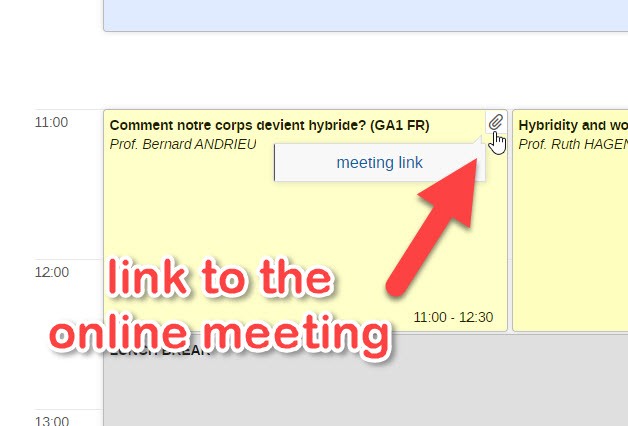
👉 Find the links to the online meetings for each session on the timetable.
The opening ceremony takes place simultaneously in English and French.
The Head of Team PhiloDay 2022, Maya Pinsolle, opens the ceremony
Prof. Edwige Chirouter, Professeure des Universités. Philosophie de l'éducation. Université de Nantes. INSPE. CREN. Titulaire de la Chaire UNESCO
The Deputy-Secretary General, Mr Manuel Bordoy
Prof. François Jourde, Pedagogical Development Unit, OSGES
The Head of European School Brussels IV (Laeken), Mrs Isabelle Verwilghen
The Head of Team, Mrs Maya Pinsolle
EN version of the Head of Team speech is hereby attached.
LINKS TO THE EDI ROOMS ARE HEREAFTER - SEE BELOW
This is a fun, challenging, and competitive activity.
An ethical dilemma is given to each contestant. The ethical dilemma is read out loud and/or projected onto a screen.
Each contestant is given two minutes to prepare a response, that is, to propose a well-argued solution to the problem.
The response has to be delivered under two minutes.
Each response is assessed by a panel of judges.
It is either a talk or a more interactive presentation/workshop on the theme of HYBRIDITY, which requires the active participation of pupils and teachers alike.
It is usually given by a guest speaker or by a Philosophy teacher from any of the European Schools. The main goals here are to raise philosophical questions, launch (collective) philosophical ways of thinking, and engage the pupils.
Description: Nos capacités sont augmentées et nous devenons des êtres hybrides : composés d'interfaces, de capteurs, de mesures de notre corps vivant. Ils révèlent une activité interne qui renouvelle la connaissance de notre corps.
Conférencier: Le Prof. Bernard Andrieu a soutenu sa thèse sur le thème de la neurophilosophie sous la direction de Dominique Lecourt.
Tout en menant un travail de recherche incessant, il a enseigné aux Universités de Bordeaux et de Nancy. Il enseigne actuellement l’épistémologie du corps et des pratiques corporelles à l’Université Paris Descartes. Son parcours académique et ses travaux de recherche constituent depuis de nombreuses années une véritable philosophie du corps.
Comme le suggèrent de nombreux titres de ses publications, travaux de recherche et ouvrages, l’interrogation des pratiques corporelles et du rapport corps humain - société est au coeur de son questionnement - aussi à travers la collaboration avec d’autres chercheurs et professeurs – citons les Prof. David Le Breton, Serge Tisseron.
Il dirige les collections Épistémologie du corps aux Presses universitaires de Nancy et Mouvements des savoirs chez L'Harmattan et co-dirige la revue interdisciplinaire Corps (éd. CNRS). Parmi ses nombreux ouvrages, en lien avec le thème de l’hybridité, on citera
Sentir son corps vivant: Emersiologie I (Ed. Vrin, 2016), Les avatars du corps : une hybridation somatechnique (Ed. Liber, 2011), Dictionnaire du corps (avec G. Böetsch, Ed. CNRS, 2008). Lien : équipe de rechrche de M. ANDRIEU
Prof. Ruth Hagengruber is currently the Head of Philosophy at the University of Paderborn. Her specializations include the philosophy of economics and information science, the history of women philosophers, and in particular the 18th century philosopher and mathematician Émilie Du Châtelet. She is, moreover, the founder and director of the Center for the History of Women Philosophers and Scientists. She also founded the Libori Summer School, which is dedicated to the teaching of the works of women philosophers and scientists, as well as the Encyclopedia of Concise Concepts by Women Philosophers, an online resource for which she functions as editor-in-chief with Prof. Mary Ellen Waithe. In 2006, Prof. Hagengruber created EcoTechGender, a research and teaching area that sees the economics, technology, and gender as factors for the future and which explores the relationships between them. Her most recent scholarly and editing works concern among many other topics, women philosophers and scientists in the early modern period, the thinking of Émilie Du Châtelet, and an ecofeminist standpoint of economic growth.
These constitute the core of the event. These smaller gatherings of pupils and teachers in different rooms happens simultaneously.
Pupils taking part in the workshops have to write a paper presenting their commentary on a philosophical text of their own choosing, preferably making a link to the theme of HYBRIDITY. The theme or topic of the paper may be chosen from one of the following:
Ethics
Theory of Knowledge
Politics and Society
Philosophical Anthropology
Other domains
The participant’s paper may consist of the following:
A substantial excerpt from a philosophical text;
A commentary on this text which should explain the main claim and question it tries to answer;
A counterpoint or counter-argument to the text’s main claim (this can either be the writer’s own reflections or another viewpoint from another thinker/field of study).
A paper can be delivered in either French or English. Each workshop lasts for 1 hour. There should be at least 15 min. for a plenary “question and answer” portion of the session. Each session is managed by a pupil chairperson (with the support of a teacher).
Title: Labels and micromanaging identity
Description: This workshop will touch on the subjects of personal identity and how modern society (and especially social media) pushes people into boxes and encourages them to micromanage their identities through the presence of hyper-specific labels. I will be discussing how identity is shaped by the previously mentioned factors and both the harm and benefits of applying different labels.
Title: Une société hybride permettrait-elle de mieux faire face aux défis futurs?
Description: En partant d' une analyse des défis auxquels notre société va être confrontée, nous allons relire quelques textes classiques de philosophie politique pour voir comment ils nous permettent d' inventer une société hybride résiliente et apte à affronter les problématiques du futur.
Description: a rethinking and change of perspective. beyond human- the thriving of earthly life. how to go beyond survival- values for a thriving, robust life upon earth. beyond Nietzsche and Heidegger- what does the posthuman signify? or rather, com-post?
Beyond Western philosophy, incipit chtonocene. how Donna Haraway's thought signifies the third transformation of spirit (the child) - Nietzsche re-thought. life-thought, the key to non dualism.
Description: A workshop on the unconscious and conscious mind, how they interact and intertwine.
Titre: Une société hybride permettrait-elle de mieux faire face aux défis futurs?
Description: En partant d' une analyse des défis auxquels notre société va être confrontés, nous allons relire quelques textes classiques de la philosophie politique pour voir comment ils nous permettent d' inventer une société hybride résiliente et apte à affronter les problématiques du futur.
These constitute the core of the event. These smaller gatherings of pupils and teachers in different rooms happens simultaneously.
Pupils taking part in the workshops have to write a paper presenting their commentary on a philosophical text of their own choosing, preferably making a link to the theme of HYBRIDITY. The theme or topic of the paper may be chosen from one of the following:
Ethics
Theory of Knowledge
Politics and Society
Philosophical Anthropology
Other domains
The participant’s paper may consist of the following:
A substantial excerpt from a philosophical text;
A commentary on this text which should explain the main claim and question it tries to answer;
A counterpoint or counter-argument to the text’s main claim (this can either be the writer’s own reflections or another viewpoint from another thinker/field of study).
A paper can be delivered in either French or English. Each workshop lasts for 1 hour. There should be at least 15 min. for a plenary “question and answer” portion of the session. Each session is managed by a pupil chairperson (with the support of a teacher).
Title: “From uncanny to uncanny valley: a fascinating conceptual journey.”
Speaker: Anneleen Masschelein is Assistant Professor in Literary Theory and Cultural Studies at the Catholic University of Leuven in Belgium (from Google books)
Related website: https://www.freud.org.uk/2019/09/18/the-uncanny/
Title: Thinking Identity with -and beyond- Paul Ricoeur
Description: Paul Ricoeur is one of the most influential philosophers of the 20th Century whose oeuvre extends to the first decade of the present century. In his writings he elaborated a theory concerning the formation of individual and collective identities that moves away from essentialist interpretations and places due emphasis on the relational, social, discursive and dynamic characteristics of identities. I aim to outline the fundamental aspects of his approach and to use it for the assessment of the very notion of hybridity.
Speaker: Angelos Mouzakitis is Assistant Professor in Social Theory at the University of Crete in Greece and he also teaches as Associate Lecturer for the Hellenic Open University. He conducted his doctoral research at the University of Warwick, U.K., under the supervision of Professor Peter Wagner and spent 2003-2004 as Jean-Monnet Fellow at the European University Institute in Florence, Italy.
Title:'Reading Hybridity in Fiction: How does Literature Engage with Philosophy?'
Description: How can literature help us to examine philosophical conundrums? Touching on Roland Barthes’s ‘Death of the Author’ and James Joyce’s Finnegans Wake, this workshop will explore how literature provides us with a space to question the complexities of identity and society. I will ask us to think about how hybridity can be examined through the flexibility of literary meaning, as we determine how literature forms a philosophical reflection of the world.
Speaker: Laura Gibbs, Ph.D. 1999 (Comparative Literature: Latin, Greek, Polish). Laura Gibbs holds a Ph.D. in Comparative Literature from the University of California, Berkeley and a Master’s of Philosophy from Oxford University and has taught online courses for the University of Oklahoma since 2002. She is both an online educator and advocate and is involved in several distance education endeavors.
Title: "Can brown women be first-rate philosophers?"
Description:
In this presentation I will discuss the question ‘Can brown women be first-rate philosophers?’ in the context of Women doing Philosophy in the Philippines. This context is one in which questioning Filipina women’s aptitude and predilection for philosophy is normalized in professional communities dominated by men. For instance, a number of women, including myself, have found themselves on the receiving end of the following comment, “Magaling ka sa philo kasi lalaki ka!” (You’re good at philosophy because you’re a man!). I will analyze the experience of operating in a context where such comments are prevalent by engaging with Kristie Dotson’s work on epistemic oppression. She defines epistemic oppression as the persistent and unwarranted infringement on an agent’s ability to utilize shared epistemic resources such that she is hindered from fully participating in knowledge production. According to Dotson, although epistemic oppression is rooted in social and political factors, there are forms of epistemic oppression that are not reducible to these because of a feature of epistemological systems: resilience. Following this idea, my focus will be on the resilience of epistemic systems that perpetuate “operative, instituted social imaginaries, habits of cognition, attitudes towards knowers and/or any relevant sensibilities” that hinder members of certain groups from fully participating in the production of knowledge.
Speaker:
Prof. Jacklyn A. Cleofas, Ph.D.
University of the Philippines (Los Banos)
Hello I’m Jacklyn. I’m an Assistant Professor at the Humanities Department of University of the Philippines Los Baños. Previously, I was a tenured faculty member at the Ateneo de Manila University. I earned a PhD in Philosophy at the National University of Singapore. My specialization is on ethics, especially moral psychology and practical ethics. Most of my recent research involves virtue theory; mainly in the domain of ethics although I will soon expand into epistemology. I also do work in Asian philosophy, more specifically on early Confucian thought and Filipino philosophy.
I have a general interest in responsibilist virtue epistemology, Wittgenstein, epistemic injustice, conceptions of justice and virtue under the capability approach, and irrealist or relativist metaethical views that reject the idea that there is a single true morality. I also think about how to address practical problems related to faith, ranging from difficulties in living out Catholic Social Teaching to dealing with the crises caused by sex abuse and abuse of power in the church.
When I’m not working I spend time with my two dogs, Sen and Olive. I also like watching movies; but not as much as I enjoy wittertainment. My all time favorite movies include ‘Pan’s Labyrinth’ (best enjoyed with ‘The Devil’s Backbone’), ‘Spirited Away,’ and ‘Maynila sa mga Kuko ng Liwanag.’ For anyone who needs a pick-me-up (who doesn’t these days?), I also recommend ‘Hot Fuzz’ and ‘ The Princess Bride.’
Title: "The Ultimate Hybrid: Sartre, Merleau-Ponty and the Incarnation”
Description: Taking as a point of departure Sartre's characterization of human existence as a futile aspiration to become God and Merleau-Ponty's exclamation, 'L'Incarnation change tout', I'll discuss the 'transhuman hybrid' of the Incarnation and, with special attention to Maurice Godlier's work on parenté, the implications that this belief has had for the social expression of embodiment in pre-modern and modern European society.
Speaker: Dr. Louis Miller earned his BA at Columbia University and his PhD at Princeton. He then became a lecturer at the University of Pennsylvania from 1992 to 1994; served as Assistant Professor at Harvard between 1995 and 2000; taught at St John's College/Annapolis from 2000 until 2007.
Title: Climate change tackles philosophy
Description: Philosophy and climate change
Speaker: Mr. Pye is a philosophy teacher and the philosophy department coordinator at EEB2. He is also an author and the founder of the Climate Academy.
From his Linkedin account:
I have taught Philosophy at the European School Brussels II since 2007.
Since 2011, I have worked closely with Michael Wadleigh (Oscar Winner, Director, 'Woodstock' 1970) and Birgit van Munster (DVM), a sustainability and climate change expert. All of our projects they together have been committed to bridging the gap between the science of sustainable development and public awareness.
The Climate Academy (est. 2011) for gifted and talented students hothouses their understanding sustainability through collaboration with leading figures in the field.
"Plato Tackles Climate Change" (2020) is the first in a series of publications that opens up both the classroom and the Academy to the wider world. This series of books: "No Common Sense", takes the greatest minds of the past (such as Nietzsche, Arendt, Descartes, Popper...) and gets them to expose the critical issues of sustainability that we face.
Titre: Corps et hybridité : corps-machine ou corps-nature?
Description: La question de l'hybridité du corps est ancienne. Dans la tradition dualiste, la chair s'hybride avec l'âme en vue d'aider l'humain à quitter son état naturel. Cette hybridité poussée à l'extrême permettrait de modifier le corps, jusqu'à en faire un corps-machine, voire un mutant.
Une autre voie serait celle du "corps-nature" : l'humain ne serait qu'un animal dans un environnement qui le dépasse et l'englobe. En affirmant la fin du spécisme, ce courant holiste plaide pour une alliance de l'humain avec les autres formes de vie. Une alliance qui postule que l'épuisement des ressources technologiques demande de penser une nouvelle écologie.
Orateur: Cédric Juliens enseigne l'anthropologie et la philosophie du corps à la Haute Ecole VINCI, à Bruxelles. Il anime par ailleurs des ateliers pratiques de travail corporel avec des soignants.
Titre: Les religion hybrides
Description: Dans cet atelier j’insisterai sur la notion de syncrétisme. Loin d'être cloisonnées comme le sont les monothéismes, les religions polythéistes s'influencent, s'interpénètrent, se combinent. Exemples significatifs (parmi d'autres) : la religion gallo-romaine, l'hindouisme, la religion chinoise, la shintoïsme japonais, le caodaïsme vietnamien ou encore le bahaïsme, voire même le New Age contemporain. Tous sont le fruit du syncrétisme.
Titre: Les hybridations de la nature et de l’homme à partir du texte de J. Dewey : « Expérience et méthode philosophique »
Description: Nous tenterons dans ce workshop de remettre en question toutes les oppositions que la philosophie moderne, dans ses formes majeures, avait consacrée entre la nature et l’homme. Pouvons-nous encore séparer ce qui relèverait du naturel et de l’artificiel, de la nature et de l’expérience, du monde et de l’homme ? Chaque partie de notre expérience ne se trouve-t-elle pas immergée dans des formes d’existence biologiques, physiques, climatiques ? Peut-on encore envisager quelque chose de « naturel » qui ne serait pas déjà modifié, transformé par les activités humaines ? Pour explorer ces questions, nous partirons d’un texte classique : le premier chapitre d’Expérience et nature du philosophe américain J. Dewey, l’une des figures majeures du pragmatisme américain.
Orateur: Didier Debaise est Maître de recherche au Fonds National de la Recherche Scientifique (FNRS), et enseigne la philosophie contemporaine à l’Université Libre de Bruxelles. Ses recherches portent principalement sur les formes actuelles de la philosophie spéculative, sur les théories de l’événement et sur les relations entre le pragmatisme et la philosophie française. Il est directeur de collection aux Presses de réel, membre de comité de rédaction de plusieurs revues, parmi lesquelles Inflexions et Multitudes. Il a consacré plusieurs travaux à la pensée de Whitehead, parmi lesquels Un empirisme spéculatif (Paris, Vrin, 2006), Le vocabulaire de Whitehead (Paris, Ellipses, 2007) et L’appât des possibles (Presses du réel, 2015). Il a édité plusieurs ouvrages tels que Vie et expérimentation, (Paris, Vrin, 2007), Philosophie des possessions (Paris, Presses du réel, 2011), avec I. Stengers, Gestes spéculatifs (Dijon, Presses du réel, 2015) et écrit des articles sur les philosophies de Bergson, Tarde, Simondon, Deleuze et Whitehead. Il travaille en ce moment sur un nouveau livre intitulé Pragmatiques de la terre.
The Philosophy Commission is a deliberating body that consists of pupil-members who engage in discussions and debate, with an eye to composing an inclusive position paper, called the Commission Paper, on a chosen philosophical question.
English is the official language of the Commission. There are maximum 15 members.
See also https://eeb4.be/philoday-philosophy-commission/
This is a fun, challenging, and competitive activity.
An ethical dilemma is given to each contestant. The ethical dilemma is read out loud and/or projected onto a screen.
Each contestant is given two minutes to prepare a response, that is, to propose a well-argued solution to the problem.
The response has to be delivered under two minutes.
Each response is assessed by a panel of judges.
It is either a talk or a more interactive presentation/workshop on the theme of HYBRIDITY, which requires the active participation of pupils and teachers alike.
It is usually given by a guest speaker or by a Philosophy teacher from any of the European Schools. The main goals here are to raise philosophical questions, launch (collective) philosophical ways of thinking, and engage the pupils.
Prof. Roland Breeur teaches modern and contemporary philosophy at the Higher Institute of Philosophy at the KU Leuven, where he is also a part of the Husserl Archives. He wrote his dissertation on Marcel Proust. While he has published on contemporary thinkers such as Merleau-Ponty, Sartre, and Bergson, his research also investigated the bases of French Modernity as could be discovered in the writings of thinkers ranging from Descartes to Malebranche. He has also published extensively on phenomenological themes like consciousness, temporality, embodiment, and subjectivity. Among his most recent publications is a book entitled Lies -- Imposture -- Stupidity (a review of which can be found here), which offers a survey of liars big and small and a nuanced and sustained reflection on the search for truth.
Prof. Jean-Noel MISSA (Université Libre de Bruxelles)
Le Prof. Jean-Noël Missa enseigne l'histoire et la philosophie des sciences biomédicales à l’Université libre de Bruxelles (ULB). Il est aussi Directeur de Recherches au Fonds National belge de la Recherche Scientifique (FNRS). Il est également co-directeur du Centre de Recherches Interdisciplinaires en bioéthique (CRIB) et membre du Comité Consultatif de Bioéthique de Belgique. Membre de l’Académie Royale des Sciences, des Lettres et des Beaux-Arts de Belgique (Classe « Technologie et Société ») il s’est engagé depuis de nombreuses années dans une démarche de vulgarisation de son domaine de recherche à un public plus large, sensible aux enjeux éthiques et de sociéte.
Docteur en médecine et docteur en philosophie, ses recherches portent sur la philosophie des sciences biomédicales (en particulier, dans le domaine des neurosciences et de la psychiatrie biologique) et sur la bioéthique. Son essai intitulé L’esprit-cerveau - La philosophie de l’esprit à la lumière des neurosciences (Ed.Vrin, 1993) ouvre une voie majeure en matière de réflexion et d’interaction entre le champ des théories philosophiques et celui des recherches en neurosciences. Ses travaux récents portent sur les techniques bio-médicales d’amélioration des performances de l’organisme humain (longévité, capacités physiques et cognitives).
Il a publié une cinquantaine d’articles scientifiques (en français et en anglais) ainsi que plusieurs ouvrages relatifs à l'histoire, l'éthique et la philosophie des sciences biomédicales. Parmi ceux-ci on citera : Enhancement : aspects éthiques et philosophiques de la médecine d’amélioration (avec Laurence Perbal, Ed. Vrin, 2009), Philosophie du dopage (coéditeur avec Pascal Nouvel, Ed. PUF, 2011), Encyclopédie du transhumanisme et du posthumanisme (Ed. Vrin, 2015).
These constitute the core of the event. These smaller gatherings of pupils and teachers in different rooms happens simultaneously.
Pupils taking part in the workshops have to write a paper presenting their commentary on a philosophical text of their own choosing, preferably making a link to the theme of HYBRIDITY. The theme or topic of the paper may be chosen from one of the following:
Ethics
Theory of Knowledge
Politics and Society
Philosophical Anthropology
Other domains
The participant’s paper may consist of the following:
A substantial excerpt from a philosophical text;
A commentary on this text which should explain the main claim and question it tries to answer;
A counterpoint or counter-argument to the text’s main claim (this can either be the writer’s own reflections or another viewpoint from another thinker/field of study).
A paper can be delivered in either French or English. Each workshop lasts for 1 hour. There should be at least 15 min. for a plenary “question and answer” portion of the session. Each session is managed by a pupil chairperson (with the support of a teacher).
Title: Is comparative philosophy an expression of hybridity?
Speaker: Dr. Andrew Soh completed his Ph.D. in Philosophy at the University of Hawaiʻi at Mānoa in 2019. His dissertation entitled, "Weiziran (為自然) and Aloha ʻĀina: Place, Identity and Ethics of the Environment," drew on insights from Daoist philosophy and Hawaiian ecological wisdom to engage in a dialogue toward the realization of an enduring and capacious ethics of the environment. His research interests are in the fields of Indigenous Ecological Ethics (in particular, Hawaiian Ecological Ethics), Daoist Philosophy, Environmental Philosophy, and Ethics of Place and Placemaking, exploring the intersection of these fields of inquiry. At present, he is a lecturer at Ateneo de Manila University, teaching two courses online, namely, Philosophy of Religion and Contemporary Asian Philosophy.
Title: L’hybridité de l’identité européenne. Réflexions à partir d’un aphorisme nietzschéen.
Description: Dans un aphorisme de Par-delà le bien et le mal, Nietzsche décrit l’homme européen comme un métis, incapable d’absorber sa propre hétérogénéité dans une unité stable. En mettant en évidence les défis et les opportunités offerts par cette hétérogénéité constitutive, nous tenterons de comprendre l’hybridité comme la catégorie clé pour penser la question de l’identité européenne.
Speaker: Le Prof. Filippo Pietrogrande est Docteur en philosophie de l'université de Groeningen. Après avoir obtenu un Master en Philosophie auprès de l'Université de Padoue (Italie), il a mené des recherches doctorales et organisé des séminaires en collaboration avec l'ULB et l'université de Groeningen (Pays-Bas). Il a soutenu sa thèse doctorale en 2021, en phénoménologie des religions.
Title: Understanding intimate partner violence: a mix of perspectives.
Description: Understanding intimate partner violence: a mix of perspectives.
Speaker: Mrs. Anastasia Balasi (EEB2, ethics, human sciences). Mrs. Balasi teaches Ethics and Human Sciences at EEB2. She is also currently the secondary school’s Ethics coordinator. She earned her BA in Philosophy from the University of Patras in Greece. During this time, she spent a semester at Charles University in Prague, and completed an internship at the Greek Gymnasium in Bielefeld, Germany. In 2017, she earned her MA in Philosophy at the KU Leuven. Two years after, she received her MA in Bioethics degree at the same institution. She has been teaching at EEB2 since 2018 and has contributed to the organization of both editions of Philo Day.
Title: Philosophical dialogue on 'hybridity' inspired by Wittgenstein
Speaker: Kristof Van Rossem (Belgium, 1969) is Master in Science of Religions and Master in philosophy (KULeuven, University of Amsterdam and of Uppsala).
He has published on practical philosophy, women in philosophy, ethics and humour. As an independent trainer, he accompanies coaching and reflection processes in different organisational settings : companies, schools, social welfare organisations, political parties, prisons, hospitals, governmental organisations,…
He is specialized in Socratic questioning. Together with Hans Bolten he leads an annual training course in Socratic dialogue facilitation among others at the International School of Philosophy in Leusden (Nl).
He conducted research into co-creation in companies commissioned by Cocom, a network of business leaders.
He is leading an annual training course in Socratic dialogue facilitation. He has been engaged in adult education and is currently teaching philosophy and (professional) ethics at the Odisee Highschool of Brussels.
He is a teacher trainer at the University of Leuven where he leads an annual seminar in philosophizing with children and adolescents.
Click Here for the ONLINE profile of Kristof: https://www.linkedin.com/in/socratischgesprek?trk=hp-identity-name
See also: https://socratischgesprek.be/who-are-we/?lang=en
Title: Hybridity/eclecticism in ancient philosophy
Description: Workshop discussion of the methods of 'hybridity' of 'eclecticism' in philosophy by illustrating how certain philosophers in the ancient world, e.g. Cicero, used eclecticism as a methodological strategy in order to formulate arguments as to how best to live. Mention will be made of Cicero's discussion of moral conflicts in De officiis Book III, and his discussion of emotions in the Tusculan Disputations Books III and IV.
Speaker: Mr. Stone studied classics, biblical languages, and philosophy at the universities of Cambridge, Paris and London. He also holds a PhD in philosophy from the University of London. He has taught philosophy, ethics and classics at EEB1 since 2012.
Title: Da oggetti da ammirare a strumenti scientifici da utilizzare: storia della ceroplastica medica a Bologna. Tra arte e scienza. Tra artigiani e medici.
Description: Il Settecento è stato un secolo caratterizzato da una inedita carica inventiva e da una meravigliosa curiosità scientifica. Un secolo in cui i confini tra le materie dovevano essere ancora disegnati con precisione e chiarezza, permettendo uno scambio inedito tra discipline e competenze differenti. Prodotto di tale fluidità, sono le collezioni di cere anatomiche conservate a Bologna, in quella che fu la sede dell’Accademia delle Scienze della città. Un'accademia definita da Bernard de Fontenelle, segretario dell’Académie des Sciences di Parigi, “l’Atlantide del cancelliere Bacone realizzata”. Le collezioni di cere anatomiche, prodotte da artigiani ed artisti, rispondevano pienamente alle precise esigenze poste dalla scuola anatomico-chirurgica bolognese e testimoniano la ricca articolazione dei rapporti fra la ricerca medica di allora e la ceroplastica, nonché la continuità della prima rispetto alla tradizione scientifica e medica locale. Non solo, ma una delle principali e più illustri autrici di questi oggetti/strumenti, fu una donna: Anna Morandi.
Speaker: Miriam Focaccia, dopo avere conseguito il dottorato in Filosofia, è ora docente a contratto presso l'Università di Bologna.
Studiosa di Storia della scienza, si interessa soprattutto di Storia della medicina fra Settecento e Novecento e del rapporto donne e scienza. Nel 2004 ha conseguito il Diplôme d'Etudes Approfondies en Histoire Sociale et Culturelle des Savoirs et des Pratiques de Santé dell'Università di Ginevra; nel 2005 è stata Associated Researcher presso il Wellcome Trust Centre for the History of Medicine dell'University College of London. Tra i suoi lavori: Cornelia Fabri Mathematician: Two Teachers, in More Than Pupils (a cura di V. Babini e R. Simili), Firenze, Olschki, 2007; Luigi Galvani Physician, Surgeon, Physicist: from Animal Electricity to Electro-physiology (con R. Simili), in Brain, Mind and Medicine: Essays in Eighteenth Century Neuroscience (a cura di Whitaker, Smith, Finger), New York, Springer, 2007; Anna Morandi Manzolini. Una donna fra arte e scienza, Firenze, Olschki, 2008; Luigi Galvani. Un laboratorio sperimentale di Ostetricia, Bologna, Pendragon, 2009; Bartolo Nigrisoli: tra clinica e chirurgia di guerra (Pendragon, 2011), Dizionario biografico delle scienziate italiane (secoli XVIII-XX) di cui ha curato il primo volume (2012). Ha collaborato con l'European Women in Chemistry. È coordinatrice redazionale del sito web Scienza a due voci. Le donne nella scienza italiana dal Settecento al Novecento.
Title: Hybridity in postcolonial theories. Reflection and challenges.
Description: The goal of the presentation is to tackle the concept of ‘hybridity’ in post-colonial theory by analyzing its connection to colonialism and immigration. According to postcolonial theoreticians, hybridity refers to the creation of new transcultural forms within the contact zone produced by colonialism. Linguistic, cultural, political, and racial hybridization take place in the ‘in-between space’ of the colonies, causing the birth of hybrid identities which deconstruct the dominant mainstream narrative of colonial powers. On one hand, during colonial times the concept of hybridity was related to the fear of miscegenation with the local population of the colonies. On the other hand, the term has also been associated with a counter-narrative produced by anti-colonial movements in response to the dichotomy between colonialists and colonized. Nevertheless, the concept itself is the subject of many critiques concerning its relevance for the consideration of local differences and for the reproduction of racial categories of the past.
Speaker: Luca Di Paola has obtained his PhD in International Studies at the University of Naples “L’Orientale” with a thesis in contemporary history titled Black Women in Britain Speak Out: il Movimento delle donne di discendenza africana e asiatica tra migrazioni, anti-imperialismo, lavoro e cittadinanza nell’Inghilterra del secondo dopoguerra (1945-1985). During his PhD, research was done on the oral and written sources at the Black Cultural Archives in Brixton, where he focused on the political activism of afroCaribbean and Asian women in Britain, and the collections at the National Archives, at the Lambeth Archives, at the Institute of Race Relations and at the George Padmore Institute. He was a visiting scholar at the University of Reading and he participated in several international conferences, such as the Summer School “Black Europe”, held in Amsterdam, and the conference “Gender and Public Space” at the University of Rouen. His research interests focus on migrations, racism, postcolonialism and black feminism. In 2020 he wrote an essay, titled “Claudia Jones tra comunismo, femminismo e anti-imperialismo”, which was published in the book “Marx nei margini. Dal marxismo nero al femminismo postcoloniale”, edited by an italian editor, Alegre.